
In this article
What Is a Slipped (Herniated) Disc?
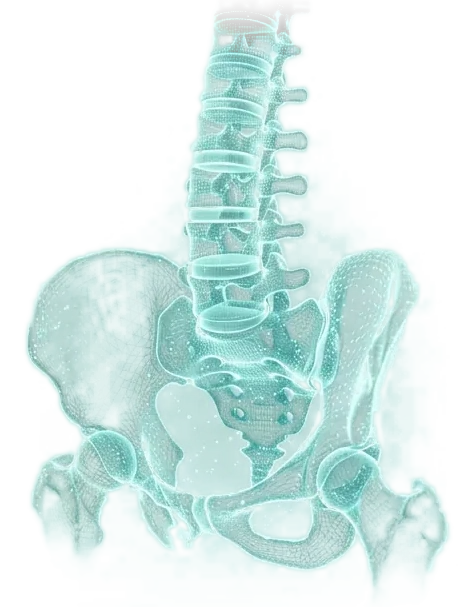
Between each pair of vertebrae sits a soft, cushioning disc that absorbs shock and allows the spine to move. A herniation occurs when part of that disc pushes outward, sometimes pressing on nearby nerves. Common contributors include years of poor posture, prolonged sitting, and the ordinary wear that comes with age, no single dramatic event is usually required.
Why Back Pain Is Easy to Dismiss, Until It Isn't
If you've had a nagging ache in your lower back for months and simply adjusted your chair, stretched occasionally, and moved on, you're far from alone. Many desk-based professionals normalize this kind of discomfort as "just how the back feels now." That's an understandable response, not a mistake, but it's also worth knowing there's a way to look at the underlying structure, rather than just managing the symptom indefinitely.
To understand how this fits into a full checkup, see Aira's spine and musculoskeletal screening or read more about spinal disc herniation screening.
How Screening May Help Identify the Cause
MRI is particularly strong at visualizing soft tissue, discs, nerves, and the structures surrounding them, in detail that other imaging methods can't match. Where detectable, findings related to disc position or nerve proximity are reviewed by a radiologist and discussed with a doctor, who can help determine what the finding means for you and what, if anything, deserves further evaluation.
Beyond the Spine, What Else a Whole-Body Scan Adds
Someone searching for answers about back pain is, understandably, focused on the spine. But a Whole Body MRI based Health Checkup looks well beyond that single symptom, covering 300+ conditions & findings across the body in one session. The spine gets a close look, and so does everything else, turning a single-issue search into a genuinely comprehensive checkup.
What Aira's Spine and Musculoskeletal Screening Covers
Aira's spine and musculoskeletal screening examines disc structure, alignment, and surrounding soft tissue as part of the broader whole-body protocol, giving both you and your doctor a detailed anatomical starting point.
From Finding to Understanding
A finding is never the final word. Aira translates results into a simple-language report, walks through it with a radiologist, and, with Aira Plus and Complete, connects you with a doctor who can advise on next steps, which might include a referral to a specialist. The goal is clarity and guidance, not a diagnosis delivered without context.
Explore Aira's spine and musculoskeletal screening to see the full scope of what this region of a Whole Body MRI based Health Checkup covers.
Whole Body MRI based Health Checkups through Aira are available across Kerala, including Kannur. Explore all Aira screening locations to find one near you.
By the Aira Medical Advisory Board
A panel of radiologists, physicians, and preventive-health specialists who guide the clinical accuracy and patient-communication standards of Aira's educational content.
Meet the Medical Advisory Board