
Your blood test is one layer.
Aira adds another.
Blood tests tell you about biochemical and metabolic health. Whole Body MRI adds detailed information about anatomy and structure, without ionizing radiation from the MRI component. Together, they give you a broader picture.
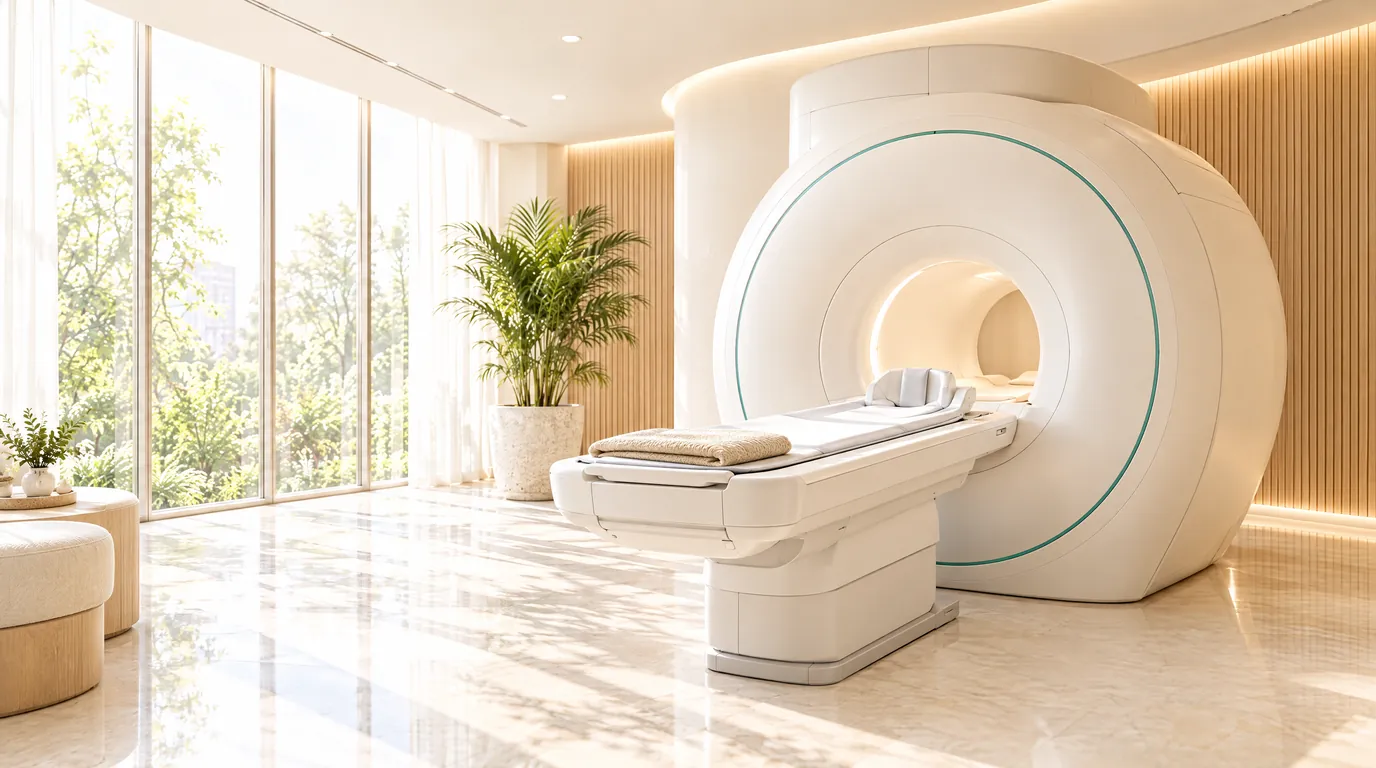
The technology, briefly
- Imaging method
- Magnetic field & radio waves
- Ionizing radiation
- None from the MRI
- What it shows
- Anatomy & soft tissue
- Screening scope
- 300+ conditions & findings
- Read by
- Radiologists
Two tests, two kinds of information. One broader picture.
A blood test measures what is circulating in your body. Whole Body MRI images what is inside it. Neither replaces the other; each adds what the other cannot show on its own.
Blood test
Biochemical & metabolicMeasures markers carried in your blood, which show how your body is functioning.
- Blood sugar & metabolism
- Cholesterol & lipids
- Organ function markers
- Blood counts
Whole Body MRI
Anatomical & structuralImages the size, shape and structure of organs and soft tissue across the body, where findings are detectable within the protocol.
Aira Plus and Aira Complete add a blood assessment to your Whole-Body Health Screening.
Compare plansMagnets and radio waves. No ionizing radiation.
MRI is one of the most established imaging technologies in medicine, used routinely in hospitals worldwide for decades. This is what happens while you lie still in the scanner.
-
A strong magnetic field
The scanner's magnet gently lines up the hydrogen in the water and fat of your body's tissues.
-
Harmless radio pulses
Short radio waves nudge that alignment. As it settles back, each tissue gives off a faint signal of its own.
-
Signals become images
Different tissues send different signals. A computer turns them into detailed cross-sectional images for a radiologist to read.
Clear about what it can show, and what it can't.
Good screening starts with honest expectations. Here is what a Whole Body MRI based screening is, and what it is not.
What it is
- A whole-body screening across 300+ conditions and findings within the Aira protocol.
- A detailed structural view of organs and soft tissue, which blood tests cannot provide on their own.
- Read by radiologists within a structured screening protocol.
- Explained to you in a simple-language report and in conversation with a radiologist, plus a doctor and nutritionist on Aira Plus and Complete.
What it isn't
- A replacement for blood tests or for your regular doctor. It adds a layer; it doesn't remove one.
- A guarantee that every condition will be found, or found early.
- A diagnosis on its own. Findings are discussed with a doctor, who helps you decide what comes next.
- Something to read alone. Every plan includes the people who explain it.
Is Whole Body MRI safe?
MRI does not use X-rays or any ionizing radiation. It has been used routinely in hospitals worldwide for decades, and your Life Coach shares any simple preparation guidance ahead of your appointment.
Because the scanner uses a strong magnet, a few things need a conversation first: pacemakers and other implanted devices, metal implants or fragments, and pregnancy. Tell your Life Coach, and the imaging centre completes a safety check before every scan.

The scanner sees. People explain.
Technology supports medical expertise; it never replaces it. Every image is read by a specialist and every finding is explained to you in plain language.
-
Read by a radiologist
Your images are reviewed by a radiologist within Aira's screening protocol.
Meet the medical team -
Written in plain language
Findings are written up in a simple-language report you can actually read.
See the Aira Report -
Explained in conversation
A radiologist walks you through the findings, then on Aira Plus and Complete a doctor and nutritionist help you plan what comes next.
How Aira works
Questions about the technology
MRI uses a strong magnetic field and harmless radio waves. The magnet lines up the hydrogen in your body's water and fat, radio pulses briefly nudge it, and the faint signals given off as it settles are turned into detailed images. No X-rays or ionizing radiation are involved in the MRI component.
A typical Whole Body MRI scan takes approximately 45 to 60 minutes. You lie still on a padded table while the scanner works. It makes rhythmic knocking sounds, so ear protection is provided, and the team can talk with you throughout.
Tell your Life Coach before booking. Many implants are MRI-safe, but some devices are not, and pregnancy always needs a conversation first. The imaging centre also completes a safety check before every scan.
Let your Life Coach know when you book. They can talk you through what to expect, and the centre team stays in contact with you for the whole scan. You can ask to pause at any time.
No. Blood tests and Whole Body MRI provide different kinds of information and complement each other: blood tests show biochemical and metabolic health, while MRI shows anatomy and structure. Aira Plus and Aira Complete include a blood assessment alongside the screening.
Yes. The CT Calcium Score is a separate heart health assessment that uses a CT scan, which involves a low dose of X-ray radiation. The Whole Body MRI component uses none. Your Life Coach and doctor can explain whether it is right for you.

Still curious about the science? Ask a Life Coach.
Real answers, no jargon. Your Life Coach can talk you through the scan, the safety checks and which plan fits you.
Know someone asking “is it really different from a blood test?” Refer a friend